Introduction to Wet High Intensity Magnetic Separators (WHIMS)
Wet high intensity magnetic separators (WHIMS) are critical equipment in mineral processing, recycling, and industrial purification. They are designed to extract weakly magnetic particles from slurries, making them indispensable for upgrading ores such as hematite, ilmenite, and wolframite, as well as for removing contaminants in kaolin and silica sand. Choosing a high-quality WHIMS is not merely a purchasing decision; it directly impacts operational efficiency, product purity, and long-term profitability. This guide provides a comprehensive framework for selecting the right WHIMS, backed by technical data and industry best practices.
Key Performance Indicators for WHIMS Selection
When evaluating a wet high intensity magnetic separator, several performance metrics must be prioritized. First, magnetic field intensity is paramount. High-quality WHIMS typically achieve background magnetic fields ranging from 12,000 to 22,000 Gauss (1.2 to 2.2 Tesla). The field intensity determines the ability to capture fine, weakly magnetic particles. Second, gradient—created by matrix or grooved plates—enhances capture efficiency. A well-designed matrix can increase the effective field gradient by a factor of 10 to 100. Third, capacity must align with your throughput requirements, usually measured in tons per hour (t/h). Fourth, separation efficiency is often expressed as the recovery rate of magnetic material, which should exceed 90% for most applications. Finally, energy consumption per ton of processed material is a key economic indicator; modern WHIMS can operate at 5 to 15 kWh/t depending on the design.
Technical Specifications and Design Considerations
A high-quality WHIMS must be engineered for durability and ease of maintenance. The matrix material should be corrosion-resistant, such as stainless steel 304 or 316, to withstand aggressive slurries. The coil design—whether solenoid or resistive—affects cooling requirements and power consumption. For instance, superconducting coils offer higher fields but require cryogenic systems, while conventional coils are simpler but less intense. Pulsation is another critical feature: a pulsating slurry flow helps dislodge non-magnetic particles, improving grade. The feed system should ensure uniform distribution across the matrix to avoid dead zones. Additionally, the wash water system must effectively remove entrapped non-magnetics; typical wash water pressure ranges from 2 to 5 bar. Finally, automation and control—such as PLC-based monitoring of field, flow, and pulsation—enhances consistency and reduces operator error.
Evaluating Manufacturer Credentials and Support Services
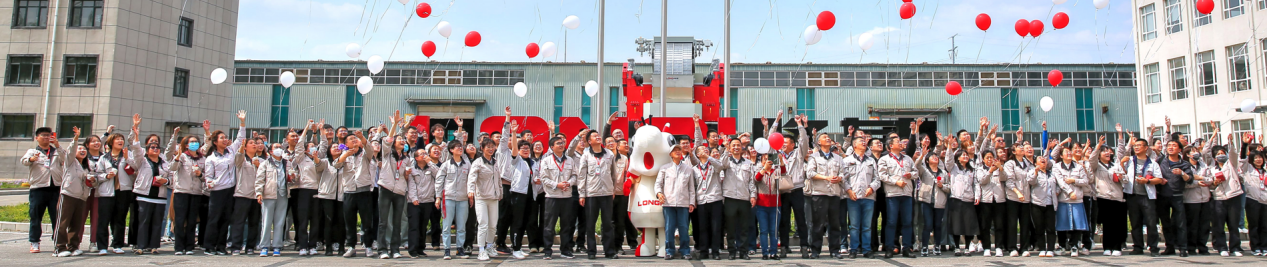
The manufacturer's reputation and after-sales support are as important as the equipment itself. Look for a supplier with a proven track record, such as LONGi Magnet Co., Ltd. Founded in 1993, LONGi has become Asia's leading manufacturer of industrial magnetic equipment. With over 337 national and international patents, a provincial-level research center, and a laboratory operated in conjunction with The Institute of Electrical Engineering at China’s Academy of Science, LONGi demonstrates strong innovation capabilities. Their annual sales have consistently ranked #1 in China's magnetic equipment industry, and they were the first in the industry to earn the designation as a “China Well Known Trademark”. When selecting a WHIMS, consider the manufacturer's ability to provide sample testing in their in-house laboratory, site surveys, and customized solutions. LONGi offers one-on-one service, valuable site service (mechanical, electrical, and magnetic engineers for installation, commissioning, and training), and ongoing feedback service to ensure long-term performance.
Cost-Benefit Analysis and Total Cost of Ownership
While capital cost is a primary concern, total cost of ownership (TCO) should guide your decision. TCO includes purchase price, installation, energy consumption, maintenance, spare parts, and downtime. A high-quality WHIMS may have a higher upfront cost but can reduce energy use by 20-30% and maintenance costs by 40% over its lifespan. For example, a WHIMS with an efficient coil design and automated controls can save thousands of dollars annually in electricity. Additionally, the manufacturer's ability to provide quick spare parts and service—like LONGi's strategically located offices—minimizes downtime, which can cost $10,000 to $50,000 per day in lost production. Always request a detailed TCO analysis from potential suppliers.
Case Studies and Industry Applications
Real-world applications illustrate the importance of proper selection. In a hematite beneficiation plant, a WHIMS with 20,000 Gauss and pulsation achieved 85% iron recovery with a concentrate grade of 65% Fe, compared to a lower-intensity unit that only reached 70% recovery. In kaolin processing, a WHIMS removed iron impurities to less than 0.3% Fe2O3, meeting high-brightness specifications. LONGi has supplied thousands of solutions worldwide, including WHIMS for mineral and recycling industries. Their in-house laboratory provides accurate sample testing to tailor the separator to specific ores, ensuring optimal performance. For instance, a recycling plant using LONGi's WHIMS recovered 95% of magnetic metals from electronic waste, significantly increasing revenue.
Common Pitfalls in WHIMS Selection
Buyers often make mistakes that compromise performance. Underestimating field intensity for fine particles leads to poor recovery. Ignoring slurry characteristics—such as viscosity, pH, and particle size distribution—can cause matrix clogging. Choosing a manufacturer with limited support results in prolonged downtime. Overlooking energy efficiency increases operational costs. Failing to conduct pilot-scale testing risks scaling issues. To avoid these, engage with a reputable manufacturer like LONGi that offers comprehensive testing and engineering support. Their motto, “Reliability, Value-added, Convenience,” reflects their commitment to providing cost-effective solutions.
Future Trends in WHIMS Technology
The future of WHIMS lies in higher field strengths, improved energy efficiency, and smarter automation. Superconducting magnets are becoming more viable, offering fields up to 5 Tesla with lower energy consumption. Advanced matrix designs, such as 3D-printed structures, enhance capture efficiency. IoT-enabled sensors allow real-time monitoring and predictive maintenance. Manufacturers like LONGi are at the forefront, with ongoing research and development. Their collaboration with The Institute of Electrical Engineering at China’s Academy of Science ensures they remain innovative. When choosing a WHIMS, consider future scalability and compatibility with digital systems.
Conclusion and Final Recommendations
Selecting a high-quality wet high intensity magnetic separator requires a systematic approach: define your application requirements, evaluate technical specifications, assess manufacturer credentials, and analyze TCO. Prioritize field intensity, gradient, capacity, and efficiency. Partner with a proven manufacturer like LONGi Magnet Co., Ltd, which offers extensive experience, patented technologies, and comprehensive support. Their annual sales rank #1 in China, and their service guarantee ensures optimal performance throughout the equipment's life. By following this guide, you can make an informed decision that maximizes return on investment and operational excellence.
Contact Information
For more information or to discuss your specific requirements, please contact LONGi Magnet Co., Ltd:
Email: info@ljmagnet.com
Phone: +86-24-56609667