Lynas agrees potential rare earths deal with South Korea’s LS Eco Energy
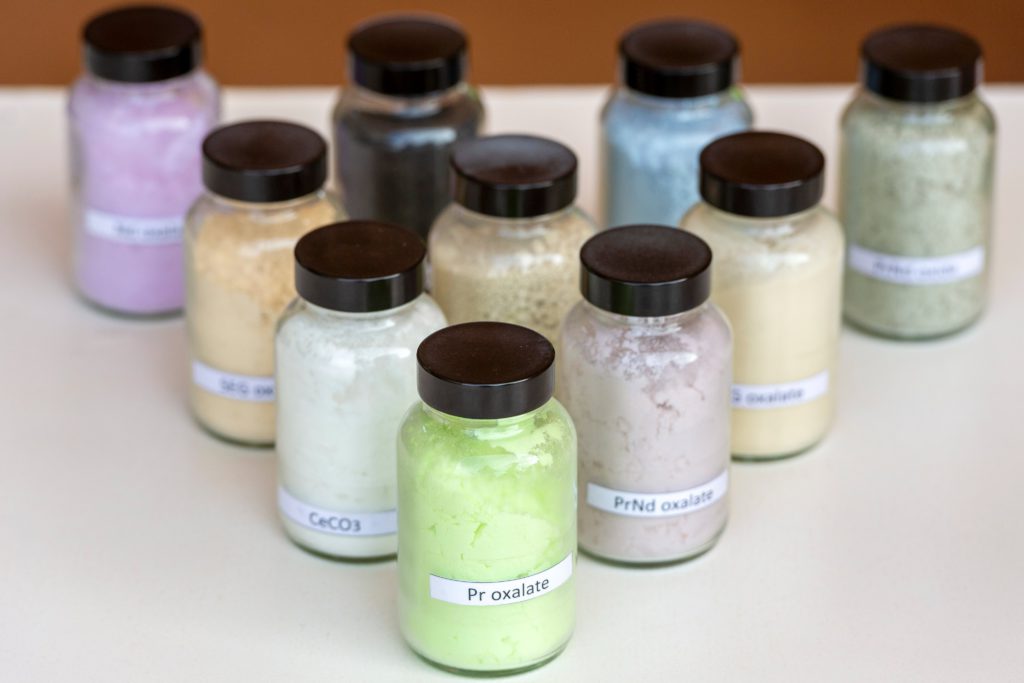
Australia’s Lynas Rare Earths and South Korea’s LS Eco Energy said on Thursday they plan to work together to process rare earths, to help meet demand from customers scrambling to secure non-Chinese sources of the key metals.

Under a preliminary agreement, Lynas said it would supply rare earth oxides to a processing plant that LS Eco Energy plans to build in Vietnam, with the South Korean firm looking to then use the metals to make permanent rare earth magnets in the US.
LS said it aims to start operations at the Vietnam factory in the fourth quarter of this year.
Rare earths, and the magnets made from them, are embedded in small but critical amounts across devices from iPhones and cars to F-35 jets.
China has for years dominated the global supply of rare earths but its export restrictions in response to US President Donald Trump’s tariffs have galvanized other nations to develop alternative sources of supply.
“Our customers in the automotive and other industrial sectors are trying to build supply chain outside of China,” Lee Sang-ho, CEO of LS Eco Energy, told Reuters.
“As China weaponized rare earths, the key for them is to quickly build a value chain on non-Chinese rare earths by buying them at premium prices,” he said.
Lynas said the new facility would help it supply more metallized NdPr (neodymium-praseodymium) and selected heavy rare earth products, with the first stage to focus on samarium, used in the aerospace and automotive industries.
The partnership also commits the two companies to negotiate separate definitive deals under which Lynas, the world’s largest rare earth producer outside China, and LS Eco Energy would each cross-subscribe to about A$30 million ($20.84 million) of convertible instruments.
LS Eco Energy, a unit of LS Cable & System, a major global cable maker, hopes to use its expertise in metals while using the group’s existing factory sites in Vietnam and the United States to reduce costs, Lee said.
Non-Chinese companies have been struggling to compete with dominant Chinese rivals on prices and technology, with projects stuck on the drawing board for years.
The slowing demand for EVs makes it even more challenging for companies to invest in production of the key minerals that are needed in every car, particularly electric vehicle motors.
($1 = 1.4393 Australian dollars)
Cited from mining.com